How to Write a Pay or Quit Notice That Stands Up in Court
A pay or quit notice is a formal written demand telling your tenant to pay overdue rent or move out within a specific number of days. If you serve this document correctly, it acts as the necessary legal first step before you can file an eviction lawsuit for nonpayment. Rest assured, we will walk you through the exact requirements so you don't worry about making costly errors that could delay your case.
9-11 minutes

Is This Guide Right for Your Landlord Situation?
- You need to start the eviction process because a tenant has failed to pay rent on time.
- You want to give your tenant a final chance to pay what they owe before going to court.
- You are unsure about state-specific timelines like 3-day, 5-day, or 14-day notice periods.
- You need to ensure your notice includes all legally required details to avoid dismissal.
What Do You Need Before Writing a Pay or Quit Notice?
- A copy of the signed lease agreement to verify the rental amount and due dates.
- Exact calculation of overdue rent including any late fees allowed by your local laws.
- Knowledge of your state's notice period which dictates how many days the tenant has to respond.
- Proof of service method such as certified mail receipts or a witness for personal delivery.
Why Do State Laws Change the Notice Timeline So Much?
The number of days you must give a tenant depends entirely on where your rental property is located, and this variation exists because each state legislature sets its own rules for landlord-tenant disputes. If you use the wrong timeline, such as giving three days in a state that requires fourteen, the court will likely dismiss your eviction case immediately. Rest assured, checking your local statutes before drafting the document ensures you don't worry about procedural errors that waste your time.

In California, the law mandates a strict three-day period for nonpayment cases, while Massachusetts requires a fourteen-day notice to quit for similar situations. You can have the peace of mind that following the specific statute for your jurisdiction protects your right to proceed with an unlawful detainer action later. Basically, the clock starts ticking only after the tenant receives the notice properly, so timing is pretty critical here.
Good to know: Some states count business days while others count calendar days, so you need to verify which method applies to your area to avoid miscalculating the deadline.
What Essential Details Must Appear in the Notice?
A valid pay or quit notice must contain specific information to be legally enforceable, and missing even one element can render the entire document useless in court. We have broken down the required components below so you can ensure your notice includes everything necessary for compliance. Keep in mind that clarity is key, as ambiguous language might confuse the tenant or give a judge reason to rule against you.
| Required Element | What It Covers | Why It Matters |
|---|---|---|
| Tenant Names | Lists every adult occupant listed on the lease agreement. | Ensures all responsible parties receive legal notice of the demand. |
| Property Address | States the full street address including unit number. | Identifies the specific premises subject to the eviction action. |
| Amount Owed | Details the exact dollar figure of overdue rent and allowed fees. | Prevents disputes over calculation errors or unauthorized charges. |
| Payment Deadline | Specifies the date and time by which payment must arrive. | Establishes the clear cutoff point for avoiding eviction filing. |
| Consequence Statement | Warns that failure to pay results in termination of tenancy. | Fulfills the statutory requirement to inform the tenant of risks. |
If you demand more than just unpaid rent, such as utility bills not covered in the lease, the notice might be considered defective in many jurisdictions. Simply stick to the rent amount and any late fees explicitly permitted by your written agreement to stay safe. The good news is that being precise with these numbers helps prevent arguments later if the case goes before a judge.
How Can You Serve the Notice Correctly to Avoid Errors?
Serving the notice means delivering it to the tenant in a way that the law recognizes as valid proof they received it. If you just slide it under the door without checking local rules, a judge might decide the service was improper and throw out your case. Don't worry, we will outline the standard methods that courts generally accept across most states.
- Personal Delivery: Hand the document directly to the tenant or another adult living at the property to ensure immediate receipt.
- Substituted Service: Give the notice to a suitable person at the residence and then mail a copy to the tenant via first-class mail.
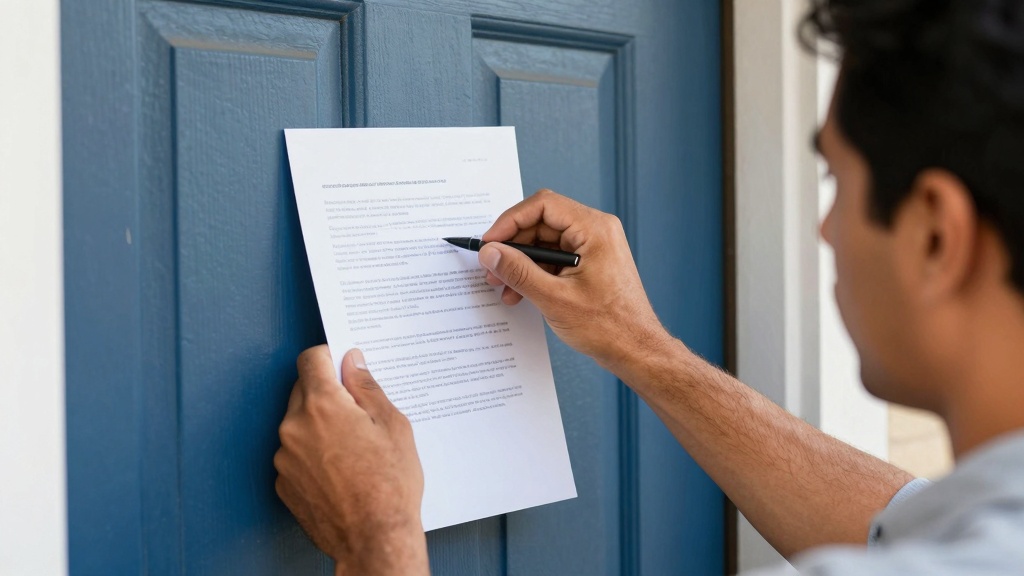
- Posting and Mailing: Tape the notice securely to the front door in a visible spot and send a duplicate through the postal service.
- Certified Mail: Send the document via certified mail with return receipt requested to create a paper trail of delivery.
Watch out: Some states require you to wait an extra few days after mailing before the notice period officially begins, so check your local code for this addition.
You should always keep a copy of the notice and any proof of delivery, like a signed receipt or a photo of the posted document. This documentation is pretty vital if the tenant claims they never saw the notice when you eventually file for eviction. Once you have served the notice correctly, you simply wait for the specified period to expire before taking further action.
If You Need a Legally Compliant Form, Can Documodo Help?
Drafting these documents from scratch can be stressful, especially when you are unsure if your wording meets every state requirement. If you want to ensure your notice includes all the correct clauses and formatting, Documodo can help you generate a customized template that fits your specific situation. You can have the peace of mind that our tools are designed to guide you through the process without requiring legal expertise.
We provide customizable templates to simplify your document creation process.
Customize This TemplateWhat Happens After the Tenant Receives the Notice?
Once the notice period expires, you will face one of three outcomes depending on how your tenant responds to the demand. If they pay the full amount owed within the deadline, the eviction process stops immediately and the tenancy continues as normal. Rest assured, accepting this payment resolves the issue without needing further legal action or court appearances.
In some cases, the tenant might try to negotiate a partial payment plan or ask for more time to gather funds. You can have the peace of mind that you are not legally required to accept partial payments unless your local laws specifically force you to do so. Basically, if you reject their offer and they do not pay in full, you may proceed to file an unlawful detainer lawsuit.
The third scenario occurs when the tenant simply moves out by the deadline listed in your document. This is often the best result since it allows you to regain possession of the property quickly without a lengthy court battle. Just make sure to inspect the unit for damages and follow standard procedures for returning security deposits after they leave.

Which Common Mistakes Could Invalidate Your Notice?
Even small errors in your document or delivery method can cause a judge to dismiss your eviction case entirely. We have listed the most frequent pitfalls below so you know exactly what to avoid when preparing your notice. Don't worry, being aware of these issues helps you stay compliant and protects your rights as a property owner.
- Demanding the wrong amount. Including late fees or charges not explicitly allowed in the lease can make the notice defective.
- Miscalculating the deadline. Failing to count weekends or holidays correctly might give the tenant less time than the law requires.
- Improper service methods. Sliding the notice under the door without mailing a copy violates rules in many jurisdictions.
- Using vague language. Phrases like "pay soon" instead of specific dates create ambiguity that courts do not accept.
- Ignoring local ordinances. Some cities have extra requirements beyond state law that must be followed to validly terminate a tenancy.
Watch out: Accepting partial rent after serving the notice might legally reset the clock in some states, forcing you to start the process over again.
Do You Have Questions About Pay or Quit Notices?
Landlords often have specific concerns about timelines, partial payments, and what happens if the tenant ignores the document completely. We have answered the most common questions below to help clarify any remaining confusion you might have. The good news is that understanding these details now saves you a lot of stress later if the situation escalates.
Can I accept partial payment after serving the notice?
It depends on your state laws and whether you want to continue with the eviction. In some places, accepting any money resets the notice period, while in others it does not affect your right to evict for the remaining balance. You should check your local statutes or consult an attorney before taking any funds to ensure you don't accidentally waive your right to proceed.
What if the tenant refuses to accept the notice?
If a tenant refuses to take the document, you can usually perform substituted service by leaving it with another adult at the residence and mailing a copy. Alternatively, posting the notice on the front door and mailing it is often valid if personal delivery fails. Keep detailed records of your attempts to serve them, including dates and times, to prove compliance in court.
Does the notice period include weekends and holidays?
This varies significantly by jurisdiction, as some states count every calendar day while others only count business days. If the last day falls on a weekend or holiday, many courts extend the deadline until the next business day. You must verify the specific counting method for your area to avoid miscalculating the expiration date.
Can I charge late fees in the pay or quit notice?
You can only include late fees if your lease agreement explicitly allows them and your state law permits collecting them via eviction notices. Demanding unauthorized fees can render the entire notice invalid, so stick to the base rent amount if you are unsure. It is safer to exclude questionable charges than to risk having your case dismissed on a technicality.
What happens if the tenant stays after the deadline?
If the tenant remains in the property after the notice period expires without paying, you must file an unlawful detainer lawsuit to remove them legally. You cannot change locks or shut off utilities yourself, as self-help evictions are illegal in all states. Filing the lawsuit starts the formal court process where a judge will decide if eviction is warranted.
A pay or quit notice is a formal written demand telling your tenant to pay overdue rent or move out within a specific number of days. If you serve this docum...
Related Documents
10 Day Eviction Notice
A 10 day eviction notice is a formal written demand giving a tenant ten days to fix a lease violation or leave the property. If you issue this document corre...
30 Day Eviction Notice
A 30 day eviction notice is a written demand that ends a month-to-month tenancy or addresses specific lease violations without immediately removing the tenan...
30 Day Notice Letter
A 30 day notice letter is simply a written message telling your landlord you plan to move out or change your lease terms. It is not an eviction order, but it...
30 Day Notice Rental
A 30 day notice rental letter is the standard written document used to end a month-to-month tenancy or change lease terms like rent increases. If you serve t...