How to Write a Legally Compliant Nebraska Eviction Notice for Your Rental Property
If you need to remove a tenant in Nebraska, the process starts with a written notice, often called a "notice to quit." This document is the mandatory first step before you can file any court case, and it must give the tenant specific time to pay rent or fix a violation. Don't worry, because we are here to guide you through the exact requirements so you can handle this situation correctly.
9-11 minutes

Is This Guide Right for Your Rental Situation?
- You are a landlord dealing with unpaid rent. If your tenant has not paid on time, you likely need to issue a formal notice to start the legal clock.
- Your tenant has broken lease rules. Whether it is unauthorized pets or noise complaints, you need a specific notice type for these violations.
- You want to end a month-to-month tenancy. If there is no fixed lease end date, you still need to provide proper written notice to terminate the agreement.
- You are unsure about Nebraska state laws. If you want to avoid court delays caused by paperwork errors, this guide covers the statutory basics you need.
What Do You Need Before Writing an Eviction Notice?
- A signed copy of the lease agreement. You will need to reference specific clauses that the tenant has violated or the terms regarding rent due dates.
- The exact amount of overdue rent. Make sure you have the precise dollar figure ready, including any late fees if your lease allows them.
- Proof of delivery method. Decide if you will hand-deliver the notice, leave it at the residence, or send it via certified mail to ensure it counts legally.
- Tenant contact information. Have the full names of all adult occupants and the complete rental property address available for the document.
Which Type of Nebraska Notice to Quit Do You Need?
The specific notice you must serve depends entirely on why you are ending the tenancy, as using the wrong form can delay your case significantly. If you are dealing with unpaid rent, a lease violation, or simply ending a month-to-month agreement, the state requires different timeframes for each situation. Rest assured, once you identify the correct category, the rest of the process becomes pretty straightforward.
| Type of Notice | What It Covers | Why It Matters |
|---|---|---|
| 7-Day Notice to Quit | Used specifically when a tenant fails to pay rent on time. | This gives the tenant seven days to pay the full amount or move out before you can file a lawsuit. |
| 14/30-Day Notice to Quit | Used for material noncompliance or lease violations like unauthorized pets. | Tenants get 14 days to fix the issue, or the lease terminates in 30 days if they do not comply. |
| 30-Day Notice to Quit | Used to terminate a month-to-month tenancy without a specific cause. | You must provide at least 30 days' notice before the next rent due date to end the agreement legally. |
Good to know: For serious issues like illegal drug activity or immediate threats to safety, you might not need to give the tenant a chance to cure the violation, but you should verify this with local statutes first.
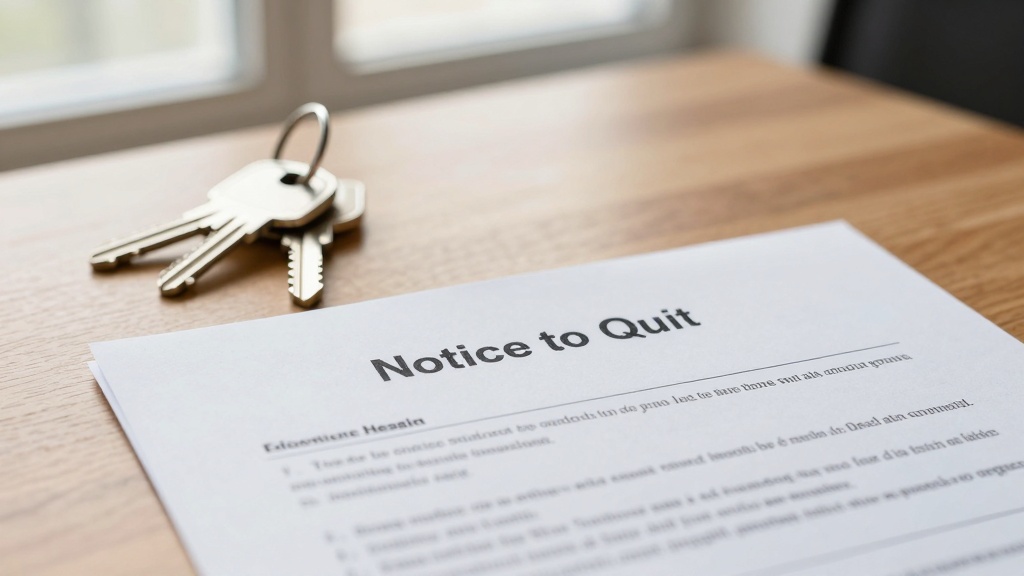
How Do You Properly Serve an Eviction Notice in Nebraska?
Even if your notice contains perfect information, it is not valid unless you deliver it according to strict state rules. You cannot just slip it under the mat and hope for the best, because the court needs proof that the tenant actually received it. Keep in mind that improper service is one of the most common reasons judges dismiss eviction cases early on.
- Hand delivery to the tenant: This is the most direct method where you personally give the notice to the tenant or an adult family member at the residence.
- Leaving it at the premises: If no one is home, you can leave the notice in a conspicuous place like the front door, but you should also mail a copy.
- Sending via certified mail: Mailing the notice through the US Postal Service with a return receipt requested provides written proof of delivery.
- Using the Sheriff's Office: Some landlords prefer to have the county sheriff serve the notice to ensure there is no dispute about whether it was delivered.
Watch out: Never change the locks or shut off utilities to force a tenant out, as this is considered a "self-help" eviction and is illegal in Nebraska.
Can Documodo Help You Create a Legally Compliant Notice?
Drafting these documents from scratch can be stressful, especially when you are worried about missing a critical statutory phrase. If you want to ensure your notice includes the correct language for Nebraska laws, Documodo can help you generate a customized template quickly. You can have the peace of mind that your document follows the standard format required by local courts.
If you need a reliable starting point for your eviction paperwork, Documodo can help you create a notice that matches your specific situation.
Customize This Template

What Happens After the Tenant Receives the Notice?
Once the notice is served, the ball is in the tenant's court to either pay up, fix the violation, or vacate the property. If they comply within the given timeframe, the issue is resolved and you do not need to go to court. However, if they ignore the notice, you will then need to file a formal complaint with the county court to proceed with the eviction.
It is pretty common for tenants to try to negotiate during this period, so be prepared to communicate clearly about your expectations. The good news is that having a properly served notice puts you in a strong legal position if the case does go before a judge.
What Common Mistakes Should Landlords Avoid?
Even with good intentions, it is pretty easy to make a small error that could reset your entire timeline. If you miss a specific detail in the notice or use the wrong timeframe, the court might dismiss your case before it even starts. Don't worry, because knowing what to avoid is half the battle in getting this right.
- Giving too little time. If you demand the tenant leave in 2 days instead of the required 3 or 7, the notice is invalid and you must start over.
- Using verbal warnings only.口头 notices do not count as legal proof in court, so you must always put your demands in writing.
- Failing to include statutory language. Missing specific phrases required by Nebraska law can make your document unenforceable during a hearing.
- Not keeping proof of service. If you cannot prove how and when you delivered the notice, a judge may rule that the tenant never received it.
- Trying to force the tenant out yourself. Changing locks or shutting off water is illegal and can lead to you owing damages to the tenant.

What Happens Once the Eviction Process Is Complete?
After the court issues a judgment and the tenant has moved out, you still have a few important responsibilities to handle. You need to inspect the property for damages and calculate any unpaid rent to determine what you can deduct from the security deposit. Rest assured, following these final steps helps you close the chapter cleanly and prepares the unit for the next resident.
Nebraska law requires you to return the remaining security deposit within 14 days of the tenancy ending. If you keep any money for repairs or unpaid bills, you must send an itemized written statement explaining exactly where the funds went. The good news is that handling this promptly prevents future legal disputes over the deposit.
Good to know: If the tenant left personal belongings behind, you should check local county rules on how long you must store them before disposing of the items.
Frequently Asked Questions About Nebraska Evictions
Can I evict a tenant without a written lease in Nebraska?
Yes, you can still evict a tenant even if there is no written lease, as they are considered month-to-month tenants. You simply need to provide a 30-day written notice to terminate the tenancy before filing any court action.
What if the tenant refuses to accept the eviction notice?
If the tenant refuses to take the paper, you can still serve them by leaving the notice in a conspicuous place at the residence, like the front door. It is also wise to mail a copy via certified mail to create a paper trail proving you attempted delivery.
How much does it cost to file an eviction lawsuit in Nebraska?
Filing fees vary by county but typically range from $50 to $150 for the initial complaint. You may also have to pay extra for sheriff service if you choose that method for delivering the court summons.
Can I charge late fees while the eviction notice is active?
You can charge late fees only if your original lease agreement specifically allows for them and defines the amount. If the lease is silent on late fees, you generally cannot add them to the amount owed during the notice period.
Does the eviction notice period include weekends and holidays?
Yes, the notice period counts every calendar day, including weekends and holidays, unless the last day falls on a Sunday or legal holiday. In that specific case, the deadline usually extends to the next business day.
If you are unsure about which notice form fits your specific situation, Documodo can help you generate a document that aligns with Nebraska statutes.
Customize This Template